
What Are the Benefits of Buying a Phone Outright?
Most people meet the phrase unlocked phone while deciding how to buy, and the more interesting half of that question is what buying outright actually changes. The idea looks expensive on the day it happens, and that first impression is why so many people never test it. The advantages arrive slowly and then keep arriving: the total cost of ownership tends to fall, the phone belongs to you completely from the first morning, and every commitment attached to it becomes optional. Three benefits in particular are worth weighing before the next upgrade, because together they explain why the outright habit, once adopted, rarely gets given up. None of them requires a change of phone; they only require a change of how the phone is paid for.
Paying Less Overall
No Interest on Instalments
The quiet cost of a monthly phone plan is the financing folded into it, and it is where the answer to what is a sim free phone begins. Instalment schemes spread the price, and spreading a price usually means paying for the spreading, either as explicit interest or as the loss of the discounts that cash buyers get. Paying once removes that layer entirely, and over a two-year ownership the saving is rarely trivial. It also changes the comparison at the counter: two phones judged on their labels are easy to weigh, while two phones judged on their monthly lines are almost impossible, because the financing terms hide inside them. The label price is the only number that cannot be rearranged after the fact.

One Clear Price
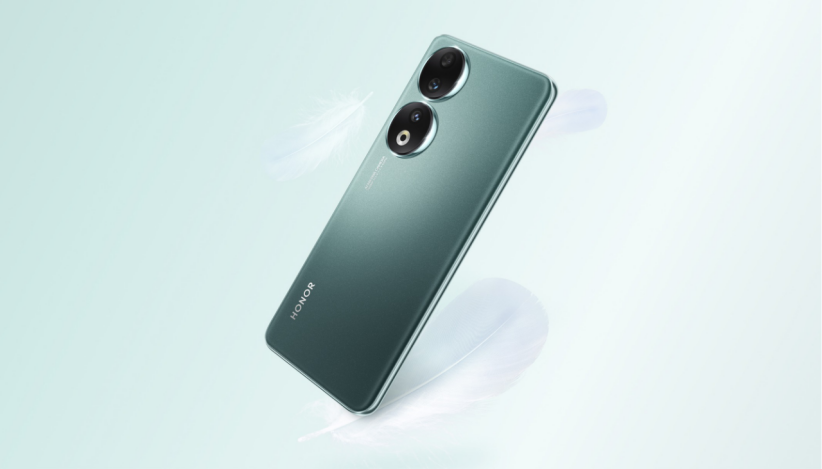
A single price makes the whole market legible in a way that bundles never manage. You can see what a handset costs, compare it directly with the alternatives, and notice when a maker's price does not match what the phone offers, which is precisely the comparison a bundle is designed to blur. It puts handsets on the same footing whatever the marketing intends: the HONOR 90 and the HONOR Magic6 Lite, for instance, both publish a single price that covers the whole device, and neither figure changes depending on which network you pair it with. Comparing the two takes minutes instead of a contract-length spreadsheet—the HONOR 90 leans on a 200MP main camera and a 120 Hz AMOLED display, while the Magic6 Lite answers with a 1.5K panel and the Snapdragon 6 Gen 1. Different points on the same scale, both readable at a glance—which is the whole point of a single price.
Owning It From Day One
No Contract Ties
Ownership starts immediately rather than after two years of faithful payments. That changes the phone's relationship with everything around it: the network it works on, the plans it can join, and the speed at which any of those can change. A phone under contract is partly the operator's property in practice, whatever the paperwork says, because leaving early costs money. An owned phone is simply yours, and the operator is a supplier you can replace whenever a better one appears. That single change of status alters every later decision, from insurance to travel, because nothing needs permission. Nothing has to be negotiated with a call centre, and no retention offer is needed to keep a number that was never on loan in the first place.
Free to Sell or Pass On
Selling or giving away an owned phone is a five-minute transaction instead of a negotiation. There is no outstanding balance to settle, no unlocking request to file, and no waiting period, which matters more than it sounds because value drains from phones on a schedule of its own. Whatever the handset fetches comes back to you whole, and passing it to a family member carries no conditions at all. Children, grandparents and students all end up with working phones sooner when no transfer paperwork stands between the device and its next user. The second-hand market also treats unlocked phones better, since every buyer is a possible buyer, and an unlocked handset usually sells in days rather than weeks for the same reason.
Simpler Commitments
No Credit Check
Buying outright skips the credit assessment entirely, and for plenty of people that is the most practical benefit of the set. No agreement means no application, no hard search on your record and no dependence on a credit score at a moment when you simply want a phone. It also removes the renewal conversation entirely, since there is nothing to renew. It also makes the purchase possible for people whose scores are thin or still being built, for whom instalment plans are often the least attractive path anyway. The transaction becomes what it looks like: a purchase, made once, remembered for its price and never for its paperwork.
Changing Plans Anytime
Without a device tied to a line, the plan itself becomes a thing you review rather than endure. Contracts can be matched to the season, downgraded during quiet months, or replaced entirely when a rival offers better value, and the phone does not care. That freedom keeps pressure on the market too, because a customer who can leave monthly is a customer every network has to keep earning. Plans can also be shared or stacked around the household as circumstances change, which a fixed term quietly forbids. Over the life of the phone, the plan savings often exceed what the handset cost to begin with.
Conclusion
Paying outright costs more on the day and less on every day after. The price is clear, the financing disappears, the phone belongs to you from the start, and every commitment around it becomes optional rather than contractual. For anyone comfortable paying upfront, the outright route turns a two-year obligation into a simple purchase, and that simplicity is worth more than the monthly plan makes it look. The phone is cheaper over time, freer from the first day, and easier to part with at the end, which is a fair description of a good buy.